
Checkout challenges in C-Stores and how to fix them
.avif)

📝 TL;DR
- Traditional self-checkout promised labour savings but has created new frustrations — shifting the burden onto customers and turning staff into error-fixers rather than service providers.
- In high-traffic, time-sensitive locations, checkout friction snowballs fast — long lines reduce throughput, deter repeat visits, and kill upselling opportunities.
- Shrinkage rises during busy periods as understaffed teams struggle to catch accidental and intentional mis-scans.
- Deligo's visual AI removes manual scanning entirely, automatically recognizing items as they're placed down — cutting transaction times to a fraction of traditional self-checkout.
- Faster checkouts free staff to focus on customers, increase store throughput, reduce theft by over 50%, and surface upsell opportunities on every transaction — turning checkout from a bottleneck into a competitive advantage.
Convenience retail is evolving quickly. Stores are expanding foodservice, extending opening hours, and operating in increasingly time-sensitive environments such as city centres, transport hubs and forecourts. Customers expect fast, predictable trips, while operators face pressure from rising labour costs, staffing shortages and the need to deliver consistent service at scale.
Checkouts sit at the centre of this tension - and for many shopowners, it has become the weakest link in the operation. Deligo was built to solve this exact problem, rethinking checkout for the realities of modern convenience shopping.
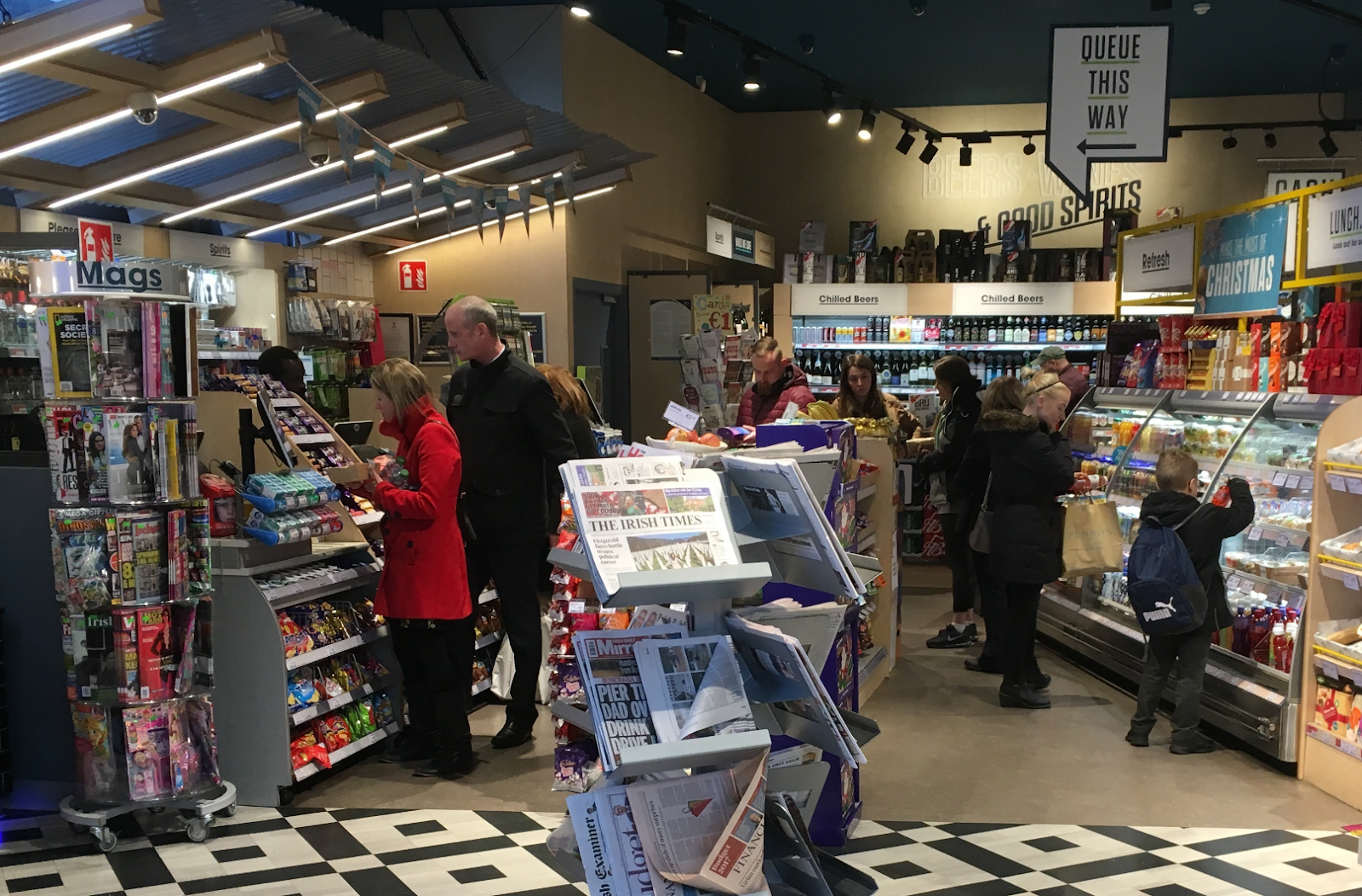
When self-checkout stops feeling like progress
For years, traditional self-checkout looked like the answer. It promised labour savings and faster service, and initially delivered both, but staffed checkouts tied up staff in repetitive transactions, limiting flexibility during peak times and increasing staffing costs.
However, across Europe, that early optimism towards self-checkout has given way to increasing frustration, from both customers and retailers. Self-checkout systems struggle to keep pace with the demands placed on them.
Barcode-scanning self-checkout was meant to relieve this pressure, but often shifts the workload onto customers instead, resulting in increased pressure at peak times. Manual scanning, navigating menus for fresh items and frequent interventions all add friction, slowing the experience and undermining the promise of convenience.
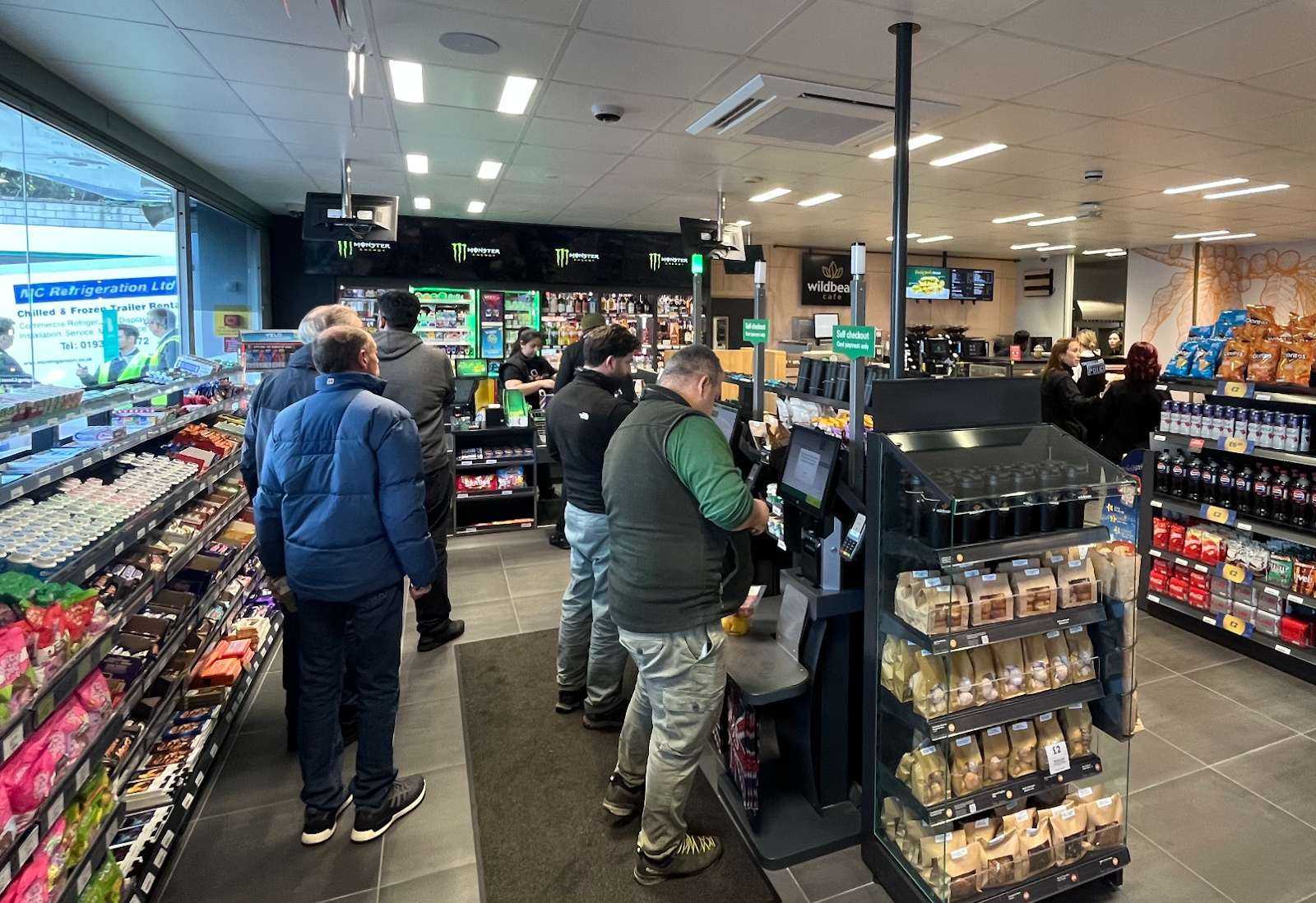
Source: Global Convenience
In high-traffic areas, that friction hits harder and can quickly snowball. Customers feel responsible for getting traditional self-checkout right - and sometimes are treated like potential thieves when checks occur.
Staff end up policing screens and fixing errors instead of helping customers or running the store. It's not just inefficient: it's draining. It changes their role from service to surveillance.
Customers are also often in a hurry. Even small delays can turn a quick stop into a frustrating one. Long lines slow throughput, deter repeat visits, and limit upsell opportunities.
Deadlines — and even minor hold-ups — can turn a quick shop into a frustrating experience. Long checkout lines reduce throughput, discourage future use, and limit customer engagement with promotions or upselling opportunities.
For operators, this translates to missed sales, uneven service quality and higher shrinkage, driven by both accidental and intentional missed scans as supervising staff are unable to catch mistakes during busy periods.
Friction shows up in shoppers’ experience - and the numbers
Deligo takes a different approach by removing the most time-consuming and error-prone part of the self-checkout process altogether - and was purpose-built specifically for the demands of convenience store operations, where speed, reliability and performance at peak times matter most.
Using visual AI technology, Deligo automatically recognizes items as they’re placed on the counter, allowing customers to spend less time before paying and leaving.
There is no manual scanning, no searching through menus and no unnecessary interaction. The result is a faster, more intuitive self-checkout that consistently completes transactions in a fraction of the time of traditional self-checkout or traditional staffed checkout.
Let staff serve customers, not machines
Staff can be freed from repetitive checkout work without being removed from the customer experience - allowing them to stay present on the shop floor, supporting multiple checkouts at once while focusing on higher-value tasks, such as food preparation, restocking and assisting customers. This can help stores manage peak demand more effectively, helping deliver a more consistent customer experience.
Speed and simplicity also unlock better commercial outcomes. Faster checkouts increase throughput, allowing stores to serve more customers during busy periods. Visual recognition significantly reduces checkout-related shrinkage, with retailers seeing theft reduced by over 50%.
At the same time, Deligo consistently surfaces foodservice and promotional upsell opportunities on every transaction, helping to grow basket size without relying on staff behaviour or adding pressure at the point of sale.
As convenience retail continues to blend foodservice, retail and rapid trips into a single experience, checkout can no longer be a bottleneck. Operators need solutions built specifically for high-pressure, high-frequency environments — ones that remove friction for customers, reduce strain on staff and improve store performance at scale. Deligo’s scan-free, visual AI checkout is designed to meet that reality, turning checkout from a constraint into a competitive advantage.
