
Less time managing checkout, more time with customers: keeping the human touch in convenience retail
.avif)
📝 TL;DR:
- Retailers are automating to cut costs and speed up service, but traditional self-checkout feels cold and impersonal
- Staff at traditional self-checkouts are reduced to fixing machine errors rather than helping customers
- Deligo uses visual AI to recognise items instantly, reducing mis-scans and speeding up checkout without needing staff to monitor it closely
- This lets employees move around the store, stay visible, and focus on genuine customer interactions
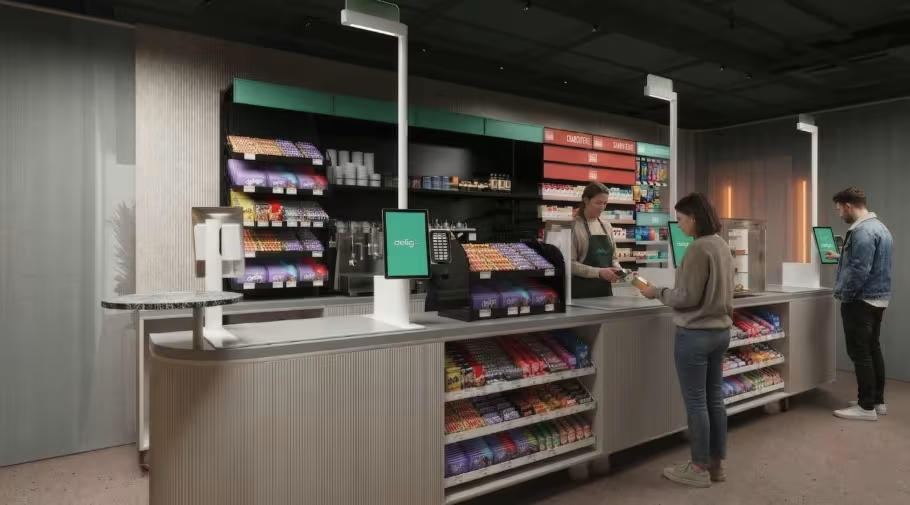
- Deligo's newest model for C-Stores, Deligo Air, lets one staff member oversee four checkout lines at once while still being available to help shoppers
- The takeaway: automation and good service aren't mutually exclusive. The best systems make staff more valuable, not redundant.
The automation tension
Retailers are under pressure to automate. Labour costs are rising, shops are expanding their food offerings, and customers expect faster service than ever before.
Self-checkout was an obvious response to these pressures, but automation has not come without a cost to customer experience. If machines take over checkout, shops lose the human touch that keeps customers coming back. Can we - and should we - stop this?
Why traditional self-checkout can feel impersonal
Traditional self-checkout often creates the opposite of the ideal customer experience in the eyes of the retailer, with customers left alone with machines that frequently require intervention, and the only staff present simply monitoring screens or resolving errors as they happen.
Instead of being proactive and helping customers, employees have become reactive “fixers” for technology, moving them away from the customer’s shopping experience.
The result can feel transactional and impersonal, with customers navigating confusing systems while staff are pulled away from meaningful interaction, and only becoming involved during negative events, such as a miscanned item.
Automation shouldn’t remove people
The goal of automation shouldn’t be to remove staff from the store, but to remove repetitive tasks that prevent them from helping customers. Employees are responsible for food preparation, stock replenishment, cleaning and assisting shoppers.
When forced to monitor self-checkouts, other higher-value responsibilities suffer. Freeing staff from scanning items and processing payments allows them to focus on the parts of the experience needing that crucial human touch.
How Deligo helps keep the human touch
This is where Deligo takes a different approach. Rather than asking customers or staff to manage the checkout process, visual self-checkout automates the transaction process, using image recognition technology to eliminate mis-scans and dramatically reduce checkout times.
Customers simply place their items down, which are instantly recognized by Deligo’s proprietary visual AI technology. Because these checkouts can run more independently, fewer team members are forced to staff checkout or resolve scanning issues with traditional self-checkouts, and can be better utilized around the store, maintaining that crucial human touch.
Staff stays present, not stuck behind a counter
With checkout handled automatically, team members can remain visible on the shop floor. One associate can easily support multiple checkouts while still helping customers, answering questions or preparing foodservice items.
Instead of standing behind a counter processing transactions, staff can focus on delivering the kind of friendly, helpful service that builds customer loyalty.
Deligo’s newest offering, Deligo Air, combines this concept of fully autonomous checkout with staff support, striking a balance between efficiency and service. Air is designed around a simple idea; checkouts should run themselves, while staff stay available for customers.
Transactions happen independently, with staff only stepping in when needed, whether that’s answering questions or assisting with restricted access items. This allows one staff member to oversee four checkout lines at once, keeping operations efficient, without sacrificing service quality.
Better experiences for both customers and teams
For customers, this creates a faster and simpler experience. Transactions happen quickly and intuitively, while staff remain available when help is needed, without being seen as an unwelcome intrusion into the checkout process.
For employees, the workday becomes less repetitive and more engaging, shifting their role from processing purchases to supporting the overall store experience.
Automation and service can coexist
As convenience stores continue to evolve, automation will play an increasingly important role in store operations. However, it is up to the operators to determine what form that automation takes; replacing people or supporting them.
The best systems don’t replace people; they help them become more valuable members of the team. By removing the friction of a traditional self-checkout while keeping staff connected to customers, Deligo helps retailers deliver faster service without losing the human touch that defines great retail experiences.
